材料・アジ 3尾(または三枚おろし済み 300g)・玉ねぎ 1/2個・青唐辛子 2本(または甘唐辛子など)・赤唐辛子(乾燥)1本・塩 小さじ1/2(約2.5g)・薄力粉(揚げる前にまぶす用)・揚げ油 適量南蛮だれ・米酢 1/2カップ(100ml)※穀物酢でも可・水 1/4カップ(50ml)・砂糖 大さじ2(約18g)・しょうゆ 大さじ1(15ml)・塩 小さじ1作り方- アジは尾の近くの硬いゼイゴを取り除き、頭を落として腹を開き、内臓を取り出してよく洗う。キッチンペーパーで内外の水気をしっかり拭き取る。
Remove the hard scales near the tail of the horse mackerel, cut off the head, open up the belly to remove the internal organs, and wash it thoroughly.
Wipe both the inside and outside thoroughly with kitchen paper and let it dry. Fillet the fish using the Japanese san-mai oroshi three-piece filleting style, remove the small bones, and cut it into pieces about 4 cm wide.
Sprinkle 1/2 teaspoon of salt evenly over the fish and let it sit for a while.
- 玉ねぎと青唐辛子は薄切りにする。
Slice the onion and bell pepper thinly.
Soak dried red chili peppers in water to soften them, remove the seeds, and slice them thinly.
- ボウルに南蛮だれの材料をすべて入れ、砂糖と塩が溶けるまでよく混ぜる。
Put all the ingredients for the nanban sauce into a bowl and mix well until the sugar and salt are completely dissolved.
Add onions, green peppers, and red peppers.
- アジに薄力粉を薄くまぶし、余分な粉をはたき落とす。
Lightly coat the fish with flour and shake off any excess.
Fry the fish in oil at about 170°C for 2 to 3 minutes until crispy.
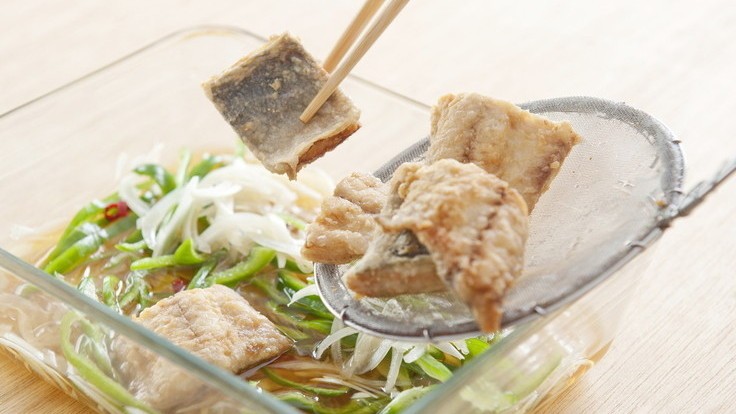
Scoop the fish out of the oil to drain off the excess, and while its still hot, soak it in the nanban sauce.
すぐに食べてもよいが、少し置いて味をなじませても美味しい。
You can eat it right away, or let it sit for a while to let the flavors soak into the fish, which will make it even tastier.
。
It can be stored in the refrigerator for about two days.
。
Cooking knowledge: What is nanban? Nanban originally refers to the peoples of southern China.
。
In Japan, around the middle of the 16th century, new cultures and goods were introduced from places such as Portugal, Spain, and Southeast Asia, and these were referred to as Nanban Southern Barbarians.
。
In the era when cooking oil and chili peppers were not yet common, deep-fried dishes with the spiciness of chili peppers were very rare and were called nanban-zuke.
。
Also, the term Namban-gashi was used to refer to Western-style sweets that were imported at the time.


 Home
Home
 Video
Video
 JLPT Test
 Dictionary
 Lesson

 Topic
Topic