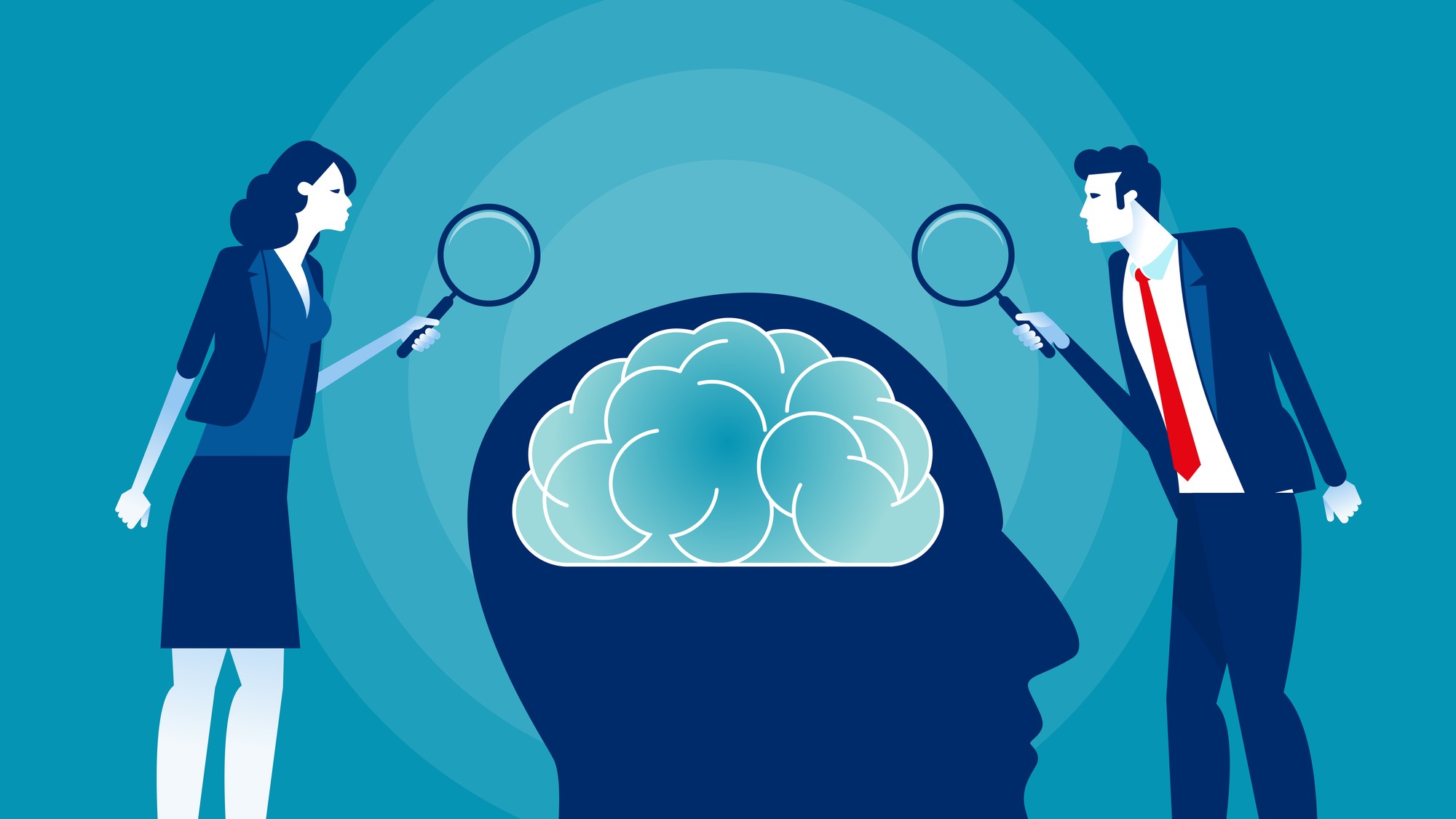
心理学とは、人間の「心」を科学的かつ客観的、さらに実証的な方法で解明しようとする学問分野である。
Psychology is an academic field that aims to scientifically, objectively, and experimentally elucidate the human mind.
。
We tend to think that we fully understand our own mind because weve been facing it since we were young, but in reality, much about its true nature still remains unclear.
。
If you try to understand the mind relying only on your personal experiences, it is inevitable that your perspective will become biased.
。
In order to unravel such mysteries of the mind, psychology has approached them using scientific methods.
。
One way to do this is to clarify the functions of the brain.
。
Because the mind is considered to be a manifestation of brain activity.
。
Although psychology has studied the mind throughout its long history, even the most fundamental aspect—emotions feelings—has yet to be fully understood.
。
You might find it strange, considering that emotions should be the field most thoroughly understood by psychology.
。
However, what modern psychology mainly understands are the fields related to sensation and perception—that is, recognizing the external world through vision, hearing, and so on, as well as fields related to cognitive functions such as thinking and memory.
。
Exactly, it is through the complex interplay and integration of sensation, perception, cognition, and emotion that our overall experience called life is shaped.
。
Recently, researchers around the world have been collaborating with experts in neuroscience and information technology to unravel the mechanisms of the mind. The results of these efforts are being applied in various fields, including robotics.
。
In fact, although advanced robots with human-like abilities such as vision, hearing, walking, and conversation have been developed, emotional functions have not yet been realized.
。
Robots can display happy expressions or dog-shaped robots can wag their tails, but these are merely external imitations and not actual emotional activities.
。
Since it is difficult to clarify the function of emotions, it is also extremely challenging to reproduce them in robots.
。
Originally, emotions enrich our experiences, serve as a powerful driving force behind our choices and actions, and exist as a foundation for our thoughts and behaviors.
。
For example, while it is very difficult to logically explain why you like or dislike something, it is easy to express it through your actual behavior.
。
People rarely choose their lovers or partners based solely on reason or calculation, but even if someone decides to marry based on calculation, emotions are often still influencing them behind the scenes.
。
Emotions are the foundation of our thoughts and actions, and when our emotions are seriously depressed, even ordinary things can become difficult.


 Home
Home
 Video
Video
 JLPT Test
 Dictionary
 Lesson

 Topic
Topic