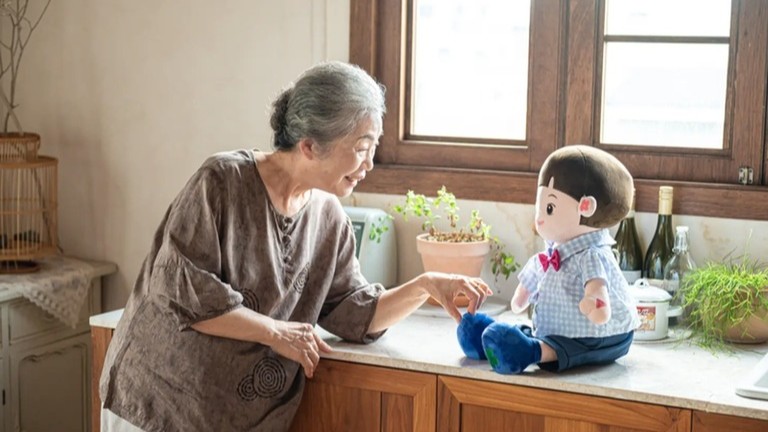
外見は大きく笑った目や愛らしい耳、鮮やかな服装に特徴づけられ、話しかける声はまるで幼い子どものように明るく響く。
The appearance of these dolls is characterized by large, smiling eyes, cute ears, and colorful costumes, and their voices sound bright and childlike when they speak.
。
However, this is not just a toy; it is made of cotton and metal, and is equipped with state-of-the-art artificial intelligence AI.
。
In South Korea, as the mental health crisis among the elderly worsens, such an unexpected solution is being implemented.
。
In South Korea, about ten elderly people commit suicide every day, and this figure is also mentioned in a report by the Korean Medical Association published in June 2025.
。
Along with Japan and Hong Kong, the suicide rate among the elderly is spreading throughout East Asia and has become a social problem. In South Korea, the suicide rate is among the highest of all OECD member countries.
。
Professor Ocelia Lee of the University of North Carolina at Charlotte points out that South Korea has entered a super-aged society. The population aged 65 and over has surpassed 10 million, accounting for one-fifth of the total population.
。
Due to the rapid changes in the population structure, the government has been unable to keep up with the development of pension and welfare systems, and the isolation of the elderly is becoming increasingly serious.
。
In fact, traditional multi-generational living is decreasing, and one in three people are forced to live alone. This creates economic burdens, feelings of loneliness, and a sense of being a burden on society, which can lead to depression and suicide.
。
In such circumstances, the South Korean government has shifted toward utilizing technology to address the shortage of personnel in the field of social welfare.
。
As an example, the AI healthcare company Hyodol distributes doll-shaped robots to elderly people living alone.
。
This robot works in conjunction with a smartphone app and a web monitoring platform for families and caregivers, providing practical support such as medication reminders and emergency calls. It also enables social workers to remotely record daily information.
。
However, it is believed that the greatest effect is on the emotional aspect.
。
These dolls, which are 38 to 50 cm tall, respond when you pat their heads or hold their hands, and they provide conversation, music, and cognitive training in voices like those of seven-year-old children.
。
Especially when an elderly person returns home alone, greeting them with Grandma/Grandpa, Ive been waiting for you, brings great comfort and peace of mind.
。
Hyodols CEO Kim says, The baby-like appearance makes it easier to build trust with the elderly and makes it user-friendly even for those who are not familiar with technology.
。
As of November 2025, more than 12,000 Hyodol robots have been distributed in South Korea, with the majority provided through public welfare programs. Additionally, around 1,000 units have been purchased privately by families.
。
According to on-site social workers, the introduction of Hyodol has led some elderly women who previously suffered from depression to reconsider suicide, and their feelings of loneliness and despair have been greatly alleviated.
。
Furthermore, according to a study published by Professor Lee in 2024, many elderly people give their robots affectionate names, buy childrens clothes for them to wear, and put them to bed under the covers before sleeping. This attachment has been shown to be associated with improvements in mental well-being.
。
In a survey of 69 participants, after six weeks of use, depressive symptoms were alleviated, cognitive function improved, and some users with mild cognitive impairment were able to delay admission to care facilities.
。
However, there are also ethical concerns that such a bond might lead to emotional dependence or make elderly people become like children.
。
Surveillance using doll-like babies may harm the dignity and independence of elderly people.
。
Kim also acknowledges this: Hyodol is not suitable for all elderly people, and it cannot completely replace human care.
。
For elderly people who are still physically and mentally independent, this robot can sometimes feel bothersome, which is one reason why the average age of its users is as high as 82.
。
Furthermore, there are concerns regarding privacy and safety related to the collection of medical data, but Mr. Kim explains, The data is anonymized, and any information that could identify individuals has been removed.
。
On the other hand, in Japan, the seal-shaped robot Paro is being used as a non-verbal partner for elderly care, and similar to Koreas Hyodol, these robots are gradually becoming popular around the world.
。
Hyodol is also working on adapting AI to the cultural backgrounds of each country, aiming for further market expansion in the future.
。
AI-equipped robots, such as Koreas chatty grandchild and Japans therapeutic seal, may become increasingly familiar presences in the daily lives of elderly people.
。
The global elderly care robot market is projected to reach $7.7 billion by 2030, and the symbiosis of technology and humans brings both new challenges and hopes.


 Home
Home
 Video
Video
 JLPT Test
 Dictionary
 Lesson

 Topic
Topic