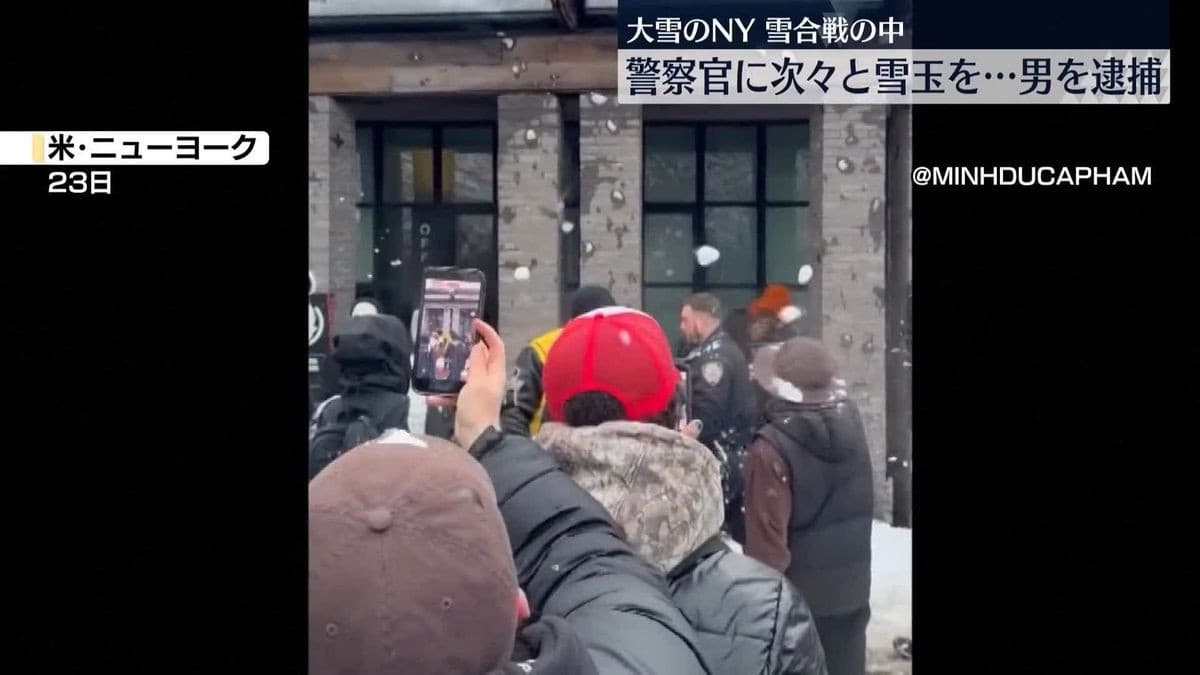
The particle で is used to indicate the place where an action occurs or the means/method by which an action is performed.ニューヨークで 雪合戦を しているとき、警察官に 雪を 投げて、男の人が 逮捕されました。
Verb in て-form + いるN5
Express an ongoing action or a continuing state.ニューヨークで 雪合戦を しているとき、警察官に 雪を 投げて、男の人が 逮捕されました。
Verb in て-form + (から)、...N4
Express an action that occurs consecutively, with the following action happening after the previous action is completed. (Here, it is used to connect consecutive actions in a sentence.)ニューヨークで 雪合戦を しているとき、警察官に 雪を 投げて、男の人が 逮捕されました。
Noun + は + information + ですN5
Sentence pattern to introduce, emphasize the topic of the sentence.ニューヨークは 大雪でした。
Plain form + のでN4
Express the cause or reason for the following action (because... so...).警察官に 雪を 投げたので、警察は 男の人を 逮捕しました。
Verb in ない form + でN4
Express not doing an action, or requesting not to do something.市長は「雪合戦だから、事件に しないで」と 言いました。
Noun + だからN4
Used to emphasize the reason or cause, often used in spoken language.市長は「雪合戦だから、事件に しないで」と 言いました。