Expresses the time when an action or state occurs, meaning when....子どもの とき、工事は こわいと 思いました。
Plain form + と + 思いますN5
Used to express one's thoughts, feelings, or opinions about a certain event.子どもの とき、工事は こわいと 思いました。
でも、~N5
Used to express contrast or opposition between two clauses, meaning but....でも、今は ちがいます。
Noun + や + Noun + などN5
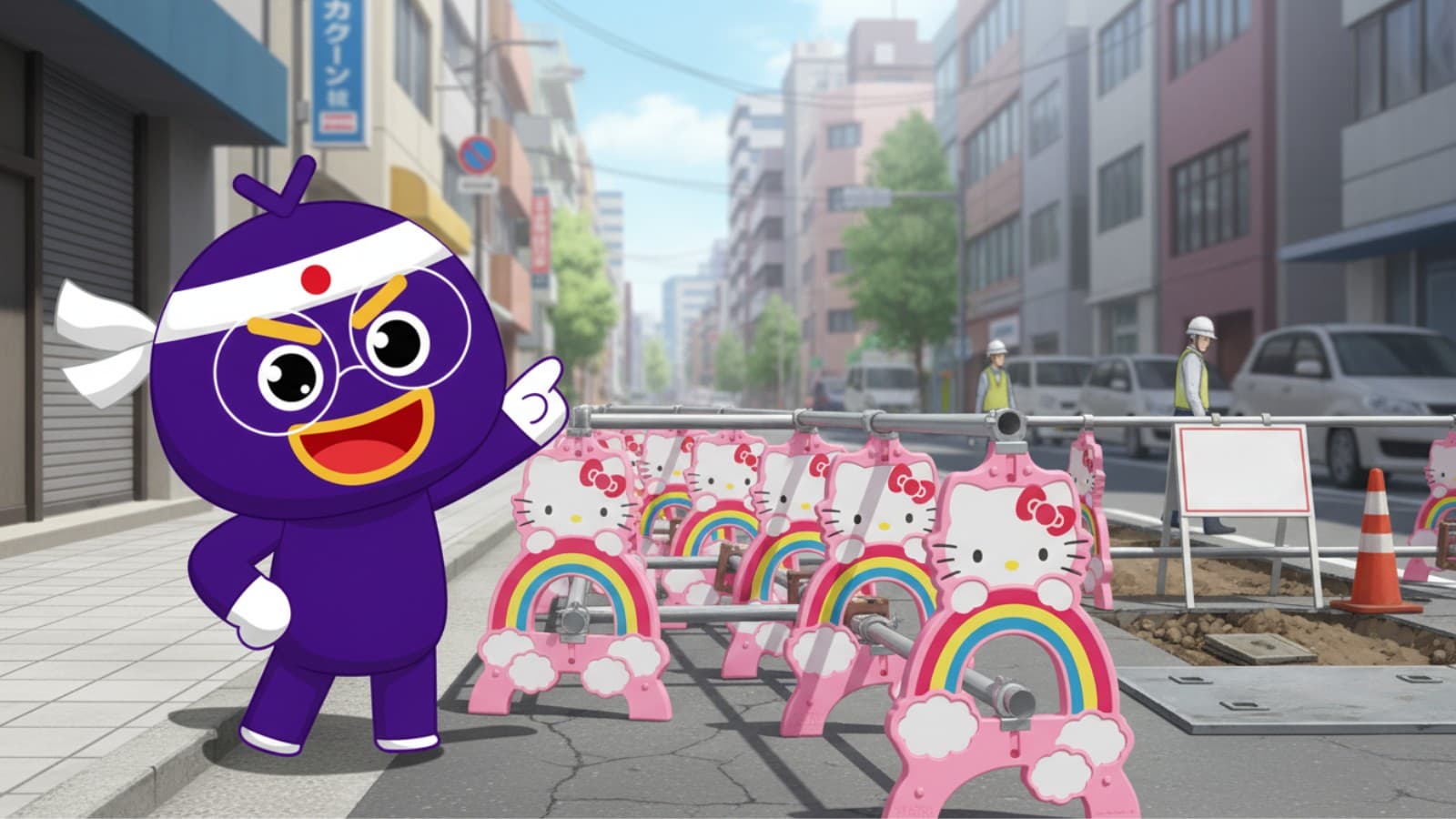
Used to list some typical examples among many things, meaning such as..., etc.ハローキティや カエルや サルなどの バリケードが あります。
Dictionary form verb + と、~N5
Expresses natural results, habits, if you do this action, then that thing will happen.それを 見ると、楽しく なります。
Noun + でもN5
Used to emphasize that even small things have meaning, meaning even... also....日本は 小さい ことでも 人を 笑顔に する 国ですね。
Noun 1 は Noun 2 が AdjectiveN5
This pattern is used to talk about an attribute of the topic indicated by「は」. Noun 1 is the topic of the sentence. Noun 2 is the subject modified by the adjective.日本の 工事は バリケードが かわいいです。