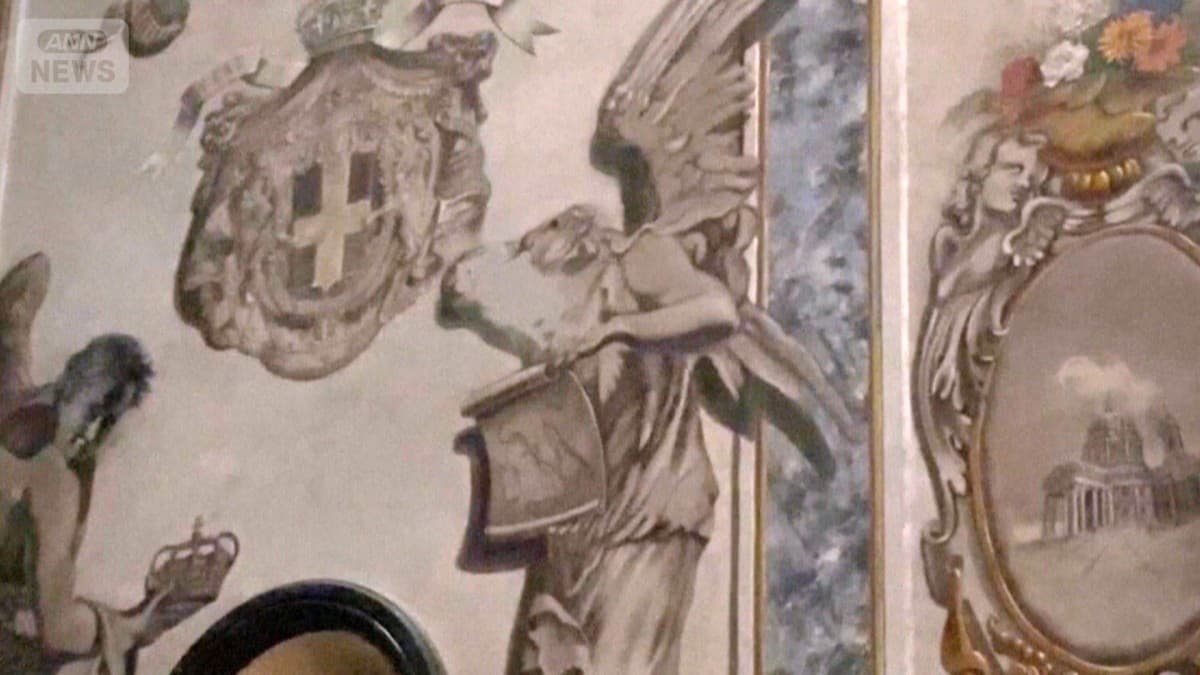
The grammar pattern expresses possession or belonging between two nouns, meaning Noun 1 of Noun 2.ローマの 教会の 壁の 絵が 直されて、天使の 顔が イタリアの 首相に 似ていました。
Verb in て form + いましたN4
Expresses a state or action that has occurred and is still continuing, or the result of an action in the past.ローマの 教会の 壁の 絵が 直されて、天使の 顔が イタリアの 首相に 似ていました。
Noun + のように + verb/adjectiveN4
Used to compare, to liken an object/event to something else.今は 幽霊の ように 見えます。
動詞て形 + くださいN5
Used to request or ask someone to do something, meaning please do....バチカンが 「白く しなさい」と 言ったので、直した 人が 白く しました。
動詞普通形+のでN4
Expresses cause, reason, equivalent to because, due to.バチカンが 「白く しなさい」と 言ったので、直した 人が 白く しました。
Verb in て-form + いますN5
Expresses the state resulting from an action or an ongoing action.元の 天使の 顔を 覚えている 人は いません。