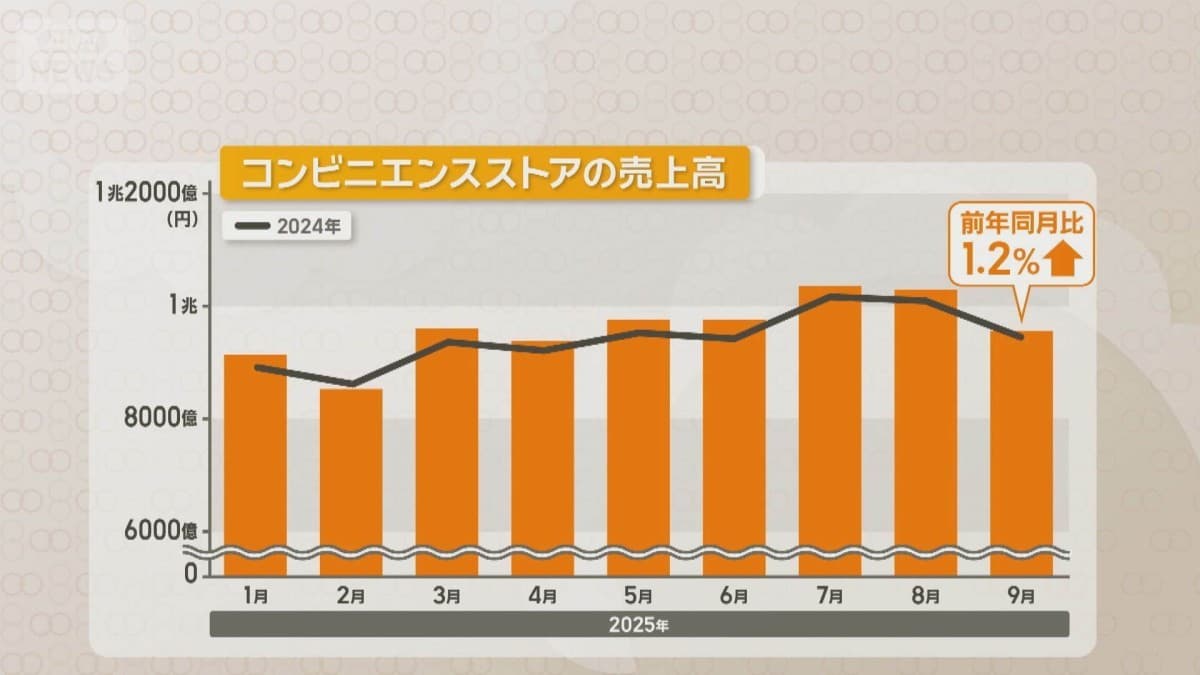
The particle は is used to identify the topic of the sentence, emphasizing information about that topic.先月の コンビニの 売り上げは、去年より 1,2% 増えました。
Noun + よりN5
より is used for comparison, meaning compared to ~.先月の コンビニの 売り上げは、去年より 1,2% 増えました。
でも、~N5
でも is used at the beginning of a sentence to express a contrasting idea or transition, meaning however or but.台風で お客さんは 少なく なりました。でも、特別な 商品を 売ったので、1人の お客さんが たくさん 買いました。
Verb in た-form + のでN5
ので goes after the verb in the た form, used to state the reason or cause for the following action, and has an objective nuance.特別な 商品を 売ったので、1人の お客さんが たくさん 買いました。
だから、~N5
だから used at the beginning of a sentence, diễn tả kết quả hay lý do, mang nghĩa do đó, vì vậy. → だから used at the beginning of a sentence, expresses a result or reason, meaning therefore, so.だから、売り上げは 良かったです。