近年、宇宙空間における宇宙ごみ(スペースデブリ)の増加が極めて深刻な問題となっている。
In recent years, the increase in space debris space junk in outer space has become a very serious problem.
。
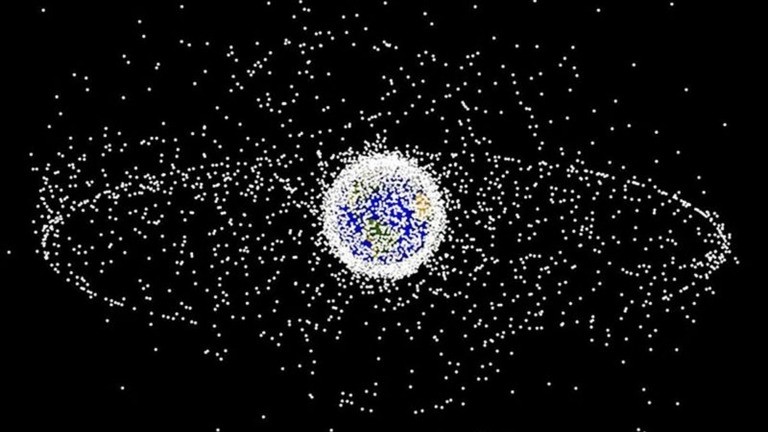
It is believed that there are millions of objects in orbit around the Earth, including defunct satellites, parts, and even tiny paint chips.
。
The International Space Station ISS must avoid collisions with this space debris, and sometimes debris collides with other debris, creating even more new debris.
。
Although there are proposed technologies to collect or destroy space debris, no comprehensive or systematic measures have been implemented so far.
。
In response to this situation, researchers at the University of Surrey in the UK published a paper outlining methods for dealing with space debris more effectively.
。
Their basic policy is to enhance the sustainability of the space environment by reducing the use of materials, repairing existing objects in orbit, and reusing space debris that is difficult to repair.
。
It is necessary to systematically implement these measures across the entire industry.
。
The concept of reduce, reuse, and recycle is widely recognized on Earth, but it must be said that it is still quite a new idea in the space industry.
。
Professor Michael Dodge, a specialist in space studies at the University of North Dakota, also pointed out this novelty.
。
According to NASA materials, there are currently more than 25,000 pieces of space debris with a diameter of over 10 cm orbiting the Earth, and if smaller fragments are included, the total number could exceed 100 million.
。
According to NASAs 2022 report, the total weight of all space debris has already exceeded 10,000 tons.
。
The impact of space debris is extremely significant.
。
For example, when Sally Ride made her first flight on the Space Shuttle Challenger in 1983, there was an incident where cracks resembling bullet holes appeared on the window due to space debris.
。
The Hubble Space Telescope has also collided with space debris multiple times, resulting in holes in its parabolic antenna and other damage.
。
Furthermore, in 2007 and 2009, there were large-scale collisions between artificial satellites, and the debris generated from those incidents now accounts for more than one-third of all recorded space debris.
。
The risk of such a chain reaction of collisions is called the Kessler Syndrome. When the number of objects in low Earth orbit exceeds a certain threshold, a single collision can trigger numerous new collisions, eventually filling the area with debris and rendering it unusable.
。
If a fundamental solution to space debris is not found, it could cause significant damage to satellites and the world’s communication infrastructure, and furthermore, global GDP could decrease by 1.95% according to a 2023 article in Space Policy.
。
This article points out that in order to build sustainable space systems, it is necessary to combine existing technologies with new ideas such as AI-powered satellite collision avoidance systems, convert space stations into platforms for repairing and reusing space debris, and ensure that companies and countries consider waste management from the design stage of objects.
。
However, establishing sustainability in outer space comes with unique challenges that do not exist on Earth.
。
In particular, the complexity of international laws and politics regarding outer space poses a significant barrier.
。
According to the Outer Space Treaty, any object launched into space remains the property of the launching country forever, so used rocket parts and decommissioned satellites are also considered the property of the country that launched them.
。
Therefore, at present, it is considered illegal for a third country to collect space debris generated by another country.
。
In order to promote the collection and reuse of space debris, permission from all owning countries is required, but in reality, this is extremely difficult.
。
However, another provision of the treaty stipulates that each country has an obligation to avoid space contamination, so it is also possible to interpret that each country is responsible for collecting its own space debris.
。
Overcoming such legal and institutional challenges to make the reuse of space debris a reality is extremely important for ensuring the sustainability of the future space industry.
。
Jin Shuang, Associate Dean of the Faculty of Research and Innovation at the University of Surrey, also stated, Interest in sustainable ideas is increasing, but in order to actually realize them, securing funding and providing incentives are essential.


 Page d'accueil
 Vidéo
Vidéo
 Examen JLPT
 Dictionnaire
 Leçon
Leçon

 Sujet
Sujet