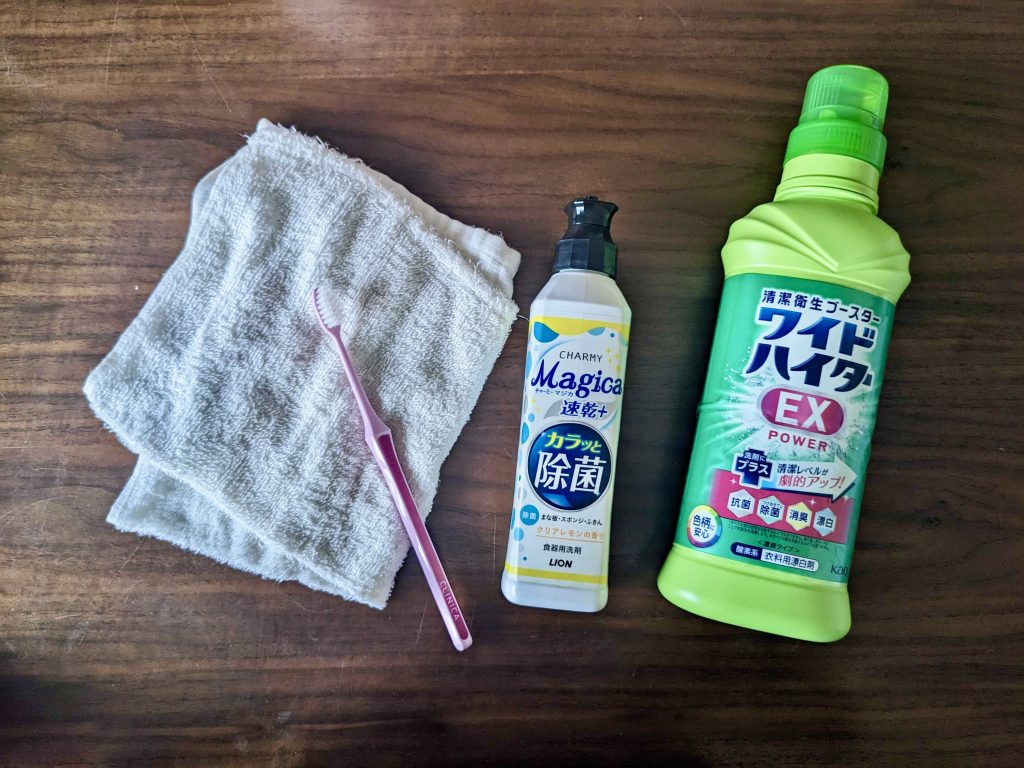
This sentence pattern is used to express the condition if... then..., used in cases where assuming an event happens, it will lead to the next result.服に シミが ついたら、すぐに きれいに しましょう。
Noun + には (N3)N5
This pattern is used to emphasize the object or case that the action or state is directed toward, often carrying the meaning of contrast or comparison.油の シミには 食器の 洗剤が いいです。
Verb in ない form + と (N4)N5
This pattern is used to express the meaning if (someone) does not do something, then..., often used to warn or advise.すぐに しないと、取れなく なります。
Dictionary form verb + と いいです (N4)N5
This pattern is used to give advice or suggestion that it would be good to do something.血の シミは 冷たい 水で 洗うと いいです。
Noun + で (N5)N5
The particle で is used to indicate means, method, or the place where an action takes place.家に ある もので 簡単に できます。
Verb in ましょう form (N5)N5
This pattern is used to invite or call someone to do something together.正しい 方法で、好きな 服を 長く 着ましょう。