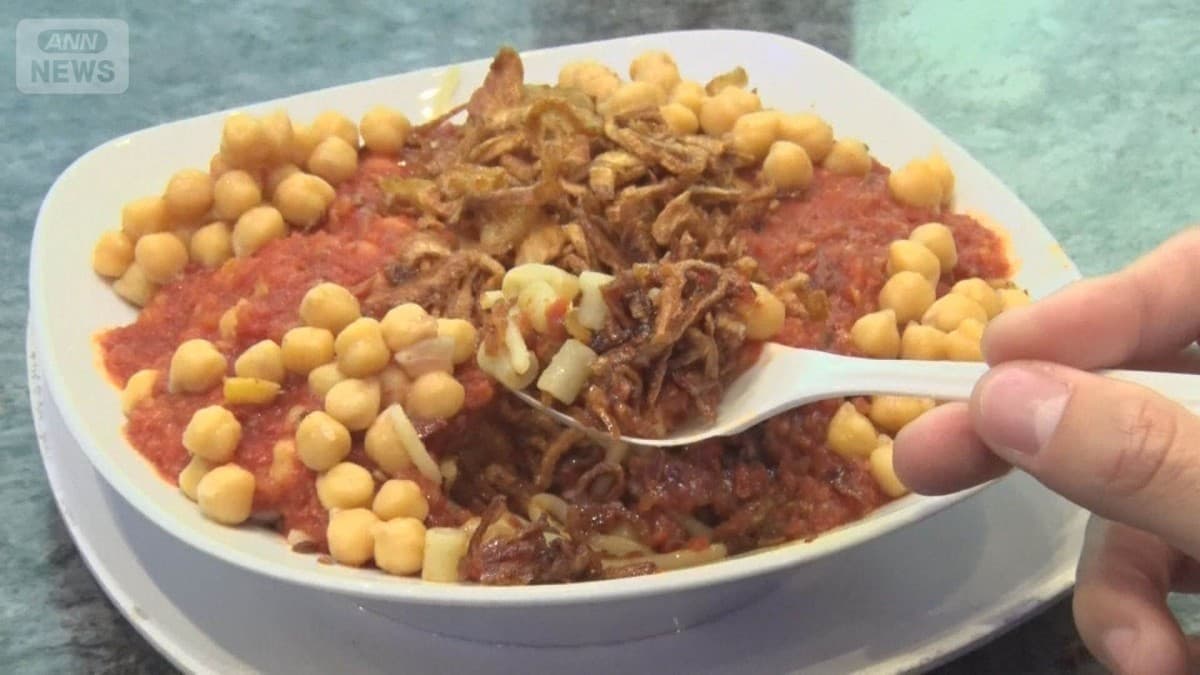
Use the passive voice to express that an object/event is performed by an unspecified agent or when it is unnecessary to specify the subject.エジプトの有名な料理「コシャリ」が、ユネスコの無形文化遺産に登録されました。
Noun + と + 一緒にN4
Express the meaning of together with, together with someone or something.イタリア料理と一緒に登録され、エジプトの人々はとても喜んでいます。
Noun + でN5
The particle で is used to indicate the place where an action occurs or the means, scope.コシャリは、エジプトで昔から食べられている料理です。
Verb in て-form + いますN5
Expresses the current state or an ongoing action, or a state that has continued from the past to the present.コシャリは、エジプトで昔から食べられている料理です。
Verb in て-form + 食べますN5
Used to connect consecutive actions, meaning to do action A and then do action B.ごはん、ひよこ豆、パスタなどを混ぜて、上に揚げた玉ねぎやトマトソースをかけて食べます。
Noun + に + is popularN4
Expresses that something is liked by someone or a certain group of people.いろいろな人に人気があります。
Noun + は + ~と評価しましたN3
Expresses that someone evaluates or comments on something.ユネスコは、「コシャリはエジプトの伝統で、人々の団結や社会のつながりを強くする料理です」と評価しました。
Verb (plain form) + と思いますN4
Expresses the speaker's thoughts, predictions, or feelings.もっと多くの外国人がコシャリを知り、食べに来てくれると思います。