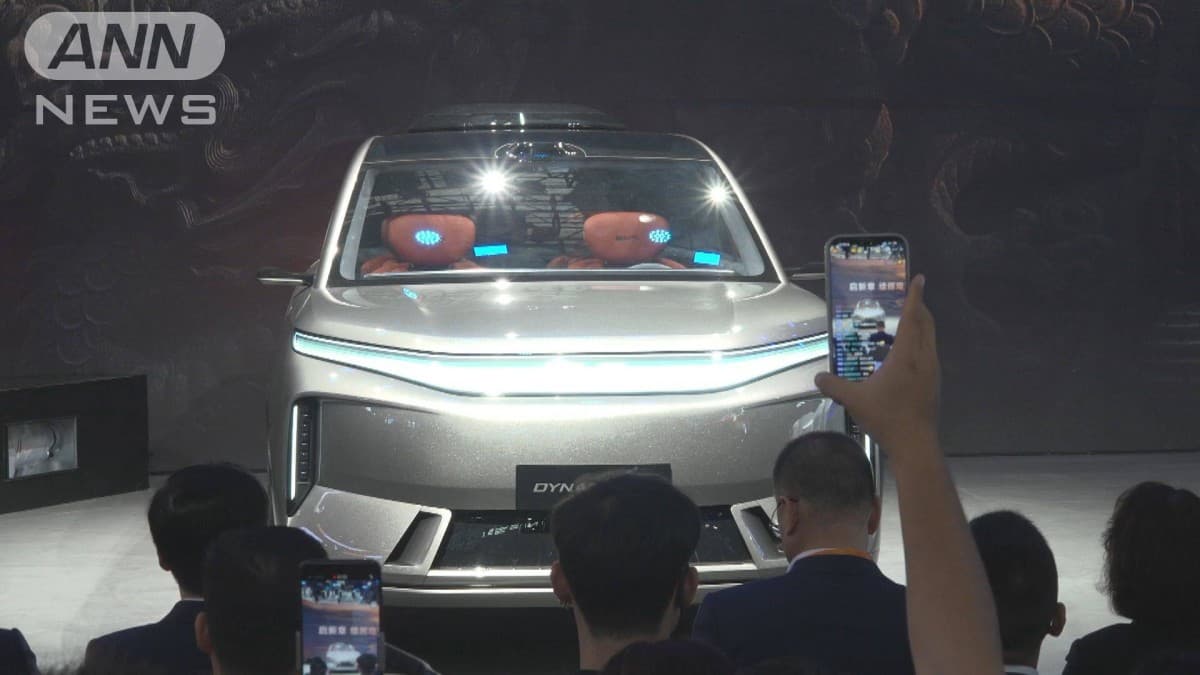
<Event> (noun 2) takes place/is held at <location> (noun 1).今年、世界で 売る 車の 4台に 1台が 電気自動車や プラグインハイブリッド車に なります。
Noun 1 が (Quantity) + (Counter) ありますN5
Indicate the existence of how many objects (Noun 1). The object indicated by Noun 1 is a non-living thing.IEAの 予測では、電動車の 売る 数が 2000万台を 超えます。
Noun もN5
<Noun> also~. も is used instead of は/が when the information about the subject of the sentence is the same as the information about the subject of the previous sentence.中国は たくさん 電動車を 作って います。
Noun 1 は , Noun 2 (time only) + までですN5
<Event> (danh từ 1) will take place until <time> (danh từ 2). Please indicate the ending time (danh từ 2) of an event (danh từ 1).2030年までに、電動車が 新しい 車の 40%を 超えると 言っています。
Verb + ましょうN5
It means Let's do ~ together!. Used to call or encourage others to do something with you, based on the assumption that the other person will agree.びじゅつかんで 日本の 絵を 見ましょう!
Noun + で (N5)N5
The particle 'で' is used to connect sentences.『HUNDRED LINE』は学園を守るゲームで、『龍の国 ルーンファクトリー』は里山を作ります。
Verb in ない form (remove い) + ければ なりません (Or verb in ない form + なければ なりません)N5
Expressing the necessity to do something.キムチを 飛行機に 乗せたい ときは、荷物に 入れなければ なりません。