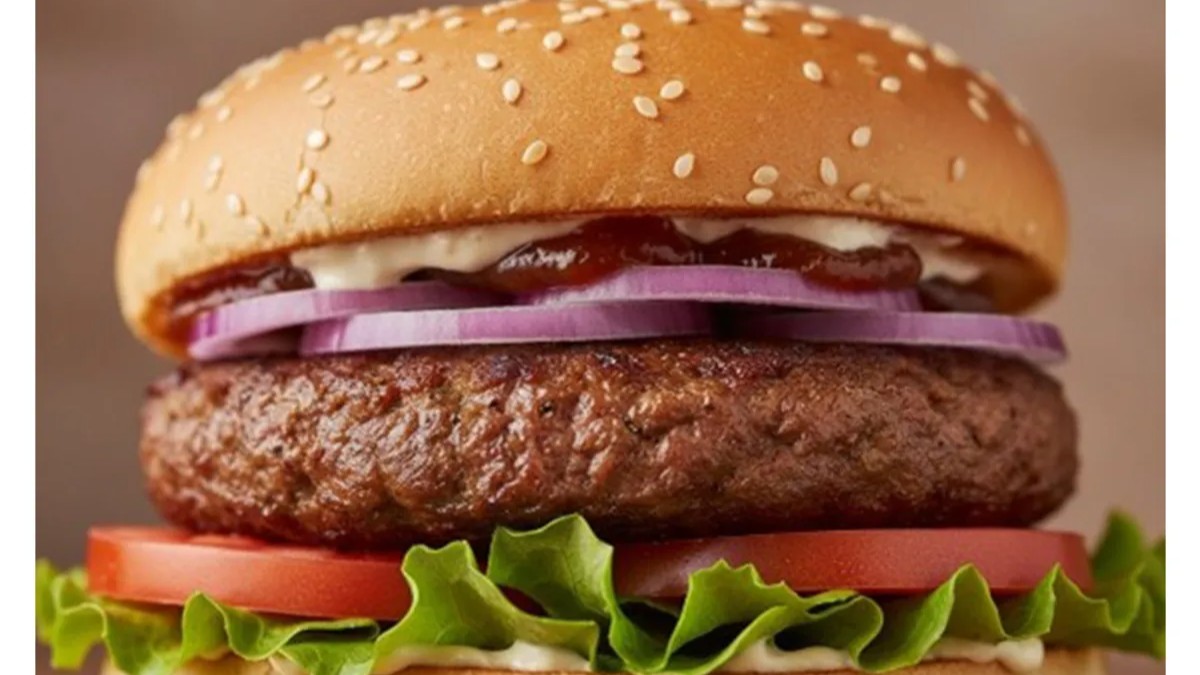
 Based on research, the team concluded that a ”drool-inducing product concept” is needed to popularize meat alternatives.
Meat alternatives are generally seen as healthy foods rather than ethical aspects such as carbon neutrality or animal welfare.
However, a research group led by Associate Professor Takumi Kato of Meiji University’s School of Commerce believed that it would be difficult to widely popularize meat alternatives simply because they are good for the body, and so they came up with a new product concept that would make consumers salivate, and demonstrated its effectiveness.
The research group says that environmental awareness among consumers in Japan is on the rise, and that there is a growing ”attitude to consider the ethical appropriateness of their own purchasing behavior.”
However, the reality is that while many people fully understand the importance of ethical products, they ”do not like products that undermine their own value.”
This means that altruistic motives such as ethics and social significance are no match for selfish motives.
Even if we know that it is good for the environment and that it avoids killing animals, the honest truth is that we still don’t want to have to endure eating something that is expensive and not tasty.
The research group points out that Japan’s food industry ”has not fully grasped the consumer psychology of ’I want to eat my fill’ when choosing a menu item at a burger shop.”
Therefore, we designed a value design that appeals to selfish motives even for ethical products and elicits saliva.We hypothesized that ”since meat substitutes are generally low in calories and fat, a product concept that appeals to selfish motives by appealing to the feeling of fullness that comes from being able to eat more will increase its appeal,” and conducted a demonstration experiment.
The experiment was an online randomized controlled trial involving 1,000 people aged between 20 and 60.
Participants were divided into five groups based on environmental concerns, animal welfare, health, and satiety, as well as a control group that did nothing for comparison. Each group was shown a corresponding product concept and their perceived appeal to a meat substitute burger was measured.
As expected, the results showed that the most appealing concept was the filling, meat-alternative burger.
The product is advertised with the slogan, ”Made only with vegetables and grains, it is low in calories and fat, so it’s fine to eat a lot of it.”
As ethical products become more widely available, their true ethical value will be more clearly demonstrated.
The research group argues that even ethical products must not run away from the ”war on saliva” in order to be chosen by consumers.
Based on research, the team concluded that a ”drool-inducing product concept” is needed to popularize meat alternatives.
Meat alternatives are generally seen as healthy foods rather than ethical aspects such as carbon neutrality or animal welfare.
However, a research group led by Associate Professor Takumi Kato of Meiji University’s School of Commerce believed that it would be difficult to widely popularize meat alternatives simply because they are good for the body, and so they came up with a new product concept that would make consumers salivate, and demonstrated its effectiveness.
The research group says that environmental awareness among consumers in Japan is on the rise, and that there is a growing ”attitude to consider the ethical appropriateness of their own purchasing behavior.”
However, the reality is that while many people fully understand the importance of ethical products, they ”do not like products that undermine their own value.”
This means that altruistic motives such as ethics and social significance are no match for selfish motives.
Even if we know that it is good for the environment and that it avoids killing animals, the honest truth is that we still don’t want to have to endure eating something that is expensive and not tasty.
The research group points out that Japan’s food industry ”has not fully grasped the consumer psychology of ’I want to eat my fill’ when choosing a menu item at a burger shop.”
Therefore, we designed a value design that appeals to selfish motives even for ethical products and elicits saliva.We hypothesized that ”since meat substitutes are generally low in calories and fat, a product concept that appeals to selfish motives by appealing to the feeling of fullness that comes from being able to eat more will increase its appeal,” and conducted a demonstration experiment.
The experiment was an online randomized controlled trial involving 1,000 people aged between 20 and 60.
Participants were divided into five groups based on environmental concerns, animal welfare, health, and satiety, as well as a control group that did nothing for comparison. Each group was shown a corresponding product concept and their perceived appeal to a meat substitute burger was measured.
As expected, the results showed that the most appealing concept was the filling, meat-alternative burger.
The product is advertised with the slogan, ”Made only with vegetables and grains, it is low in calories and fat, so it’s fine to eat a lot of it.”
As ethical products become more widely available, their true ethical value will be more clearly demonstrated.
The research group argues that even ethical products must not run away from the ”war on saliva” in order to be chosen by consumers.











Todaii Japanese is a website for learning and reading Japanese news integrating various features such as dictionary, practice, testing, ...
https://todaiinews.com
todai.easylife@gmail.com
(+84) 865 924 966
315 Truong Chinh, Khuong Mai, Thanh Xuan, Hanoi














 Home
Home
 Video
Video
 JLPT Test
 Dictionary
 Lesson

 Topic
Topic