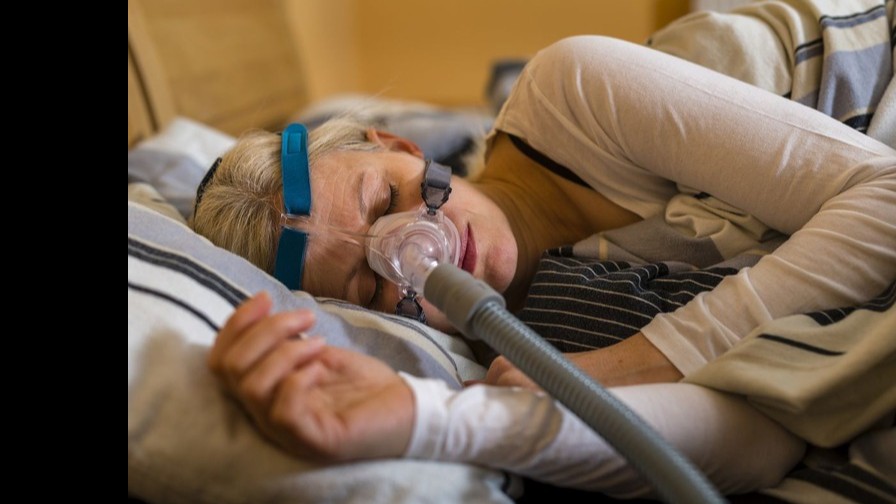
自身のいびきの深刻さを自覚していながらも、検査を受けるほどの差し迫った必要性を感じない人は少なくないだろう。
Although many people are aware of the severity of their own snoring, there are quite a few who do not feel the need to get checked immediately.
。
Furthermore, even when CPAP therapy is recommended as a treatment for obstructive sleep apnea OSA, many people tend to avoid it due to the inconvenience of this method.
。
However, according to the latest research, it has been found that neglecting OSA carries a risk of developing dementia or Alzheimers disease in the future.
。
In this observational study, it was revealed that moderate to severe OSA increases the risk of developing new cerebral microbleeds.
。
According to Jonathan Graff-Radford, Professor of Neurology at the Mayo Clinic in Minnesota, microbleeds in the brain tend to increase with age, and people with this condition have been found to be at higher risk of stroke and progression of cognitive decline in the future.
。
All factors that increase microbleeds are deeply related to the brains aging process, he emphasized.
。
OSA is a disorder in which soft tissues become lax or thickened, causing airway obstruction and disrupted breathing during sleep. This is different from central sleep apnea syndrome, where breathing signals from the brain stop.
。
Treatment methods include the use of continuous breathing assistance devices such as CPAP, as well as surgery.
。
Professor Rudy Tanzi, who is the head of the Department of Genetics and Aging at Massachusetts General Hospital and also a professor of neurology at Harvard University, was not involved in this study, but emphasizes the importance of screening and treating OSA.
。
He warned that leaving OSA untreated not only increases the risk of cerebral hemorrhage, but also raises the risk of developing Alzheimers disease in the future.
。
Furthermore, the decline in sleep quality caused by OSA may not only accelerate brain aging, but also increase the risk of dementia through the occurrence of microbleeds.
。
Therefore, it must be said that underestimating OSA means facing a double risk.
。
OSAの治療が微小出血の予防に直結するかどうかは、今後の更なる検証が求められる。
タンジ氏は、OSAの兆候を見逃さないことの重要性を強調している。
特に、頻繁ないびき、睡眠中の呼吸停止や息切れの自覚がある場合には、OSAが疑われる。
また、日中の過度な眠気や集中力の低下、易怒性、空腹感の増大も質の悪い睡眠の兆候であり、検査を受けるべきタイミングである可能性が高い。
さらに、約30%のOSA患者が訴える寝汗や、夜間に複数回目覚める、歯ぎしり、起床時の頭痛なども見逃してはならない症状である。
以上のことから、OSAの早期発見と適切な治療介入が、脳の健康維持および将来的な認知症予防に極めて重要であることが改めて強調されるべきであろう。


 Home
Home
 Video
Video
 JLPT Test
 Dictionary
 Lesson

 Topic
Topic