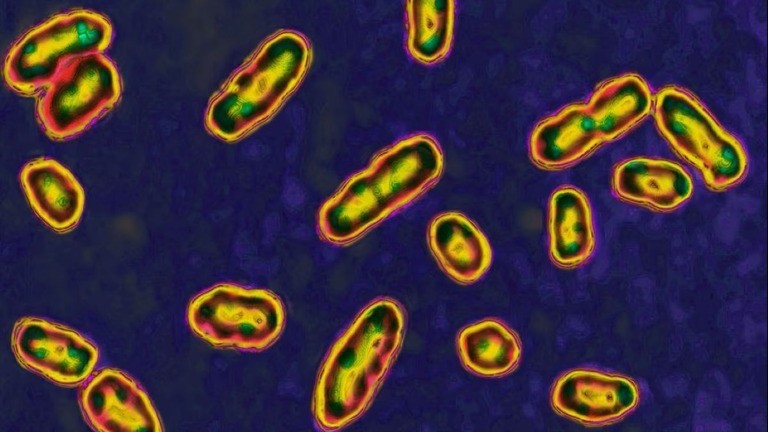
黒死病は、14世紀にヨーロッパで多くの人が亡くなった大きな病気です。
The Black Death was a major disease that claimed many lives in Europe in the 14th century.
しい
研究によると、この
病気の
流行は
火山の
噴火が
原因かもしれません。
According to new research, the outbreak of this disease may have been caused by a volcanic eruption.
たちは、ヨーロッパの
木の
年輪や
南極、グリーンランドの
氷を
調べました。
Researchers examined the tree rings in Europe and the ice in Antarctica and Greenland.
。
According to the results, a large volcanic eruption occurred around 1345, about two years before the outbreak of the plague Black Death.
。
Volcanic ash blocked the sunlight, causing the temperature to drop and making it impossible for crops to grow.
。
Therefore, food became scarce, and Italian cities hurriedly imported grain from the Black Sea.
。
However, among those grains were rat fleas carrying the plague bacteria.
。
This bacterium came from Central Asian rats and infected humans.
。
The Black Death is a disease that causes swelling of the lymph nodes and took the lives of many people.
。
Researchers found evidence of volcanic eruptions through tree rings and the amount of sulfur in ice.
。
Furthermore, they also discovered that the trade of grains was a major cause of the spread of the plague.
。
It is believed that volcanic eruptions, a drop in temperature, food shortages, and the spread of the plague bacterium triggered the outbreak of the Black Death.


 Page d'accueil
 Vidéo
Vidéo
 Examen JLPT
 Dictionnaire
 Leçon
Leçon

 Sujet
Sujet