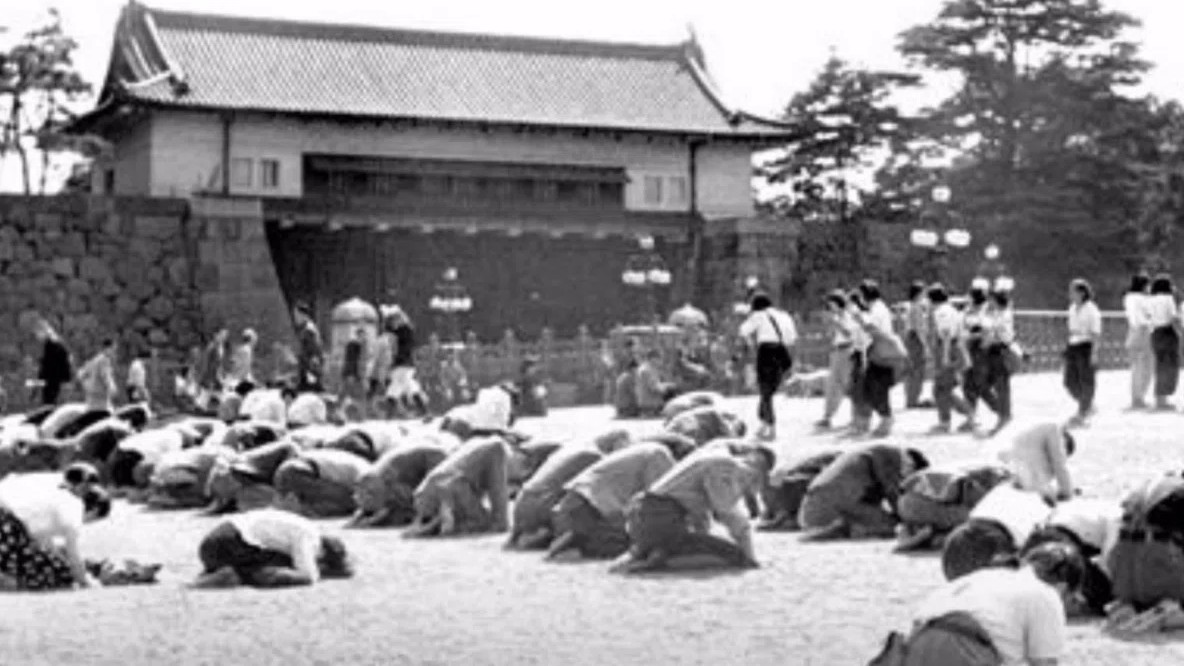
伊丹万作は、戦後の映画界における戦争責任者の追放運動に、自らの名が挙げられたと聞き、困惑を隠しきれなかった。
Mansaku Itami could not hide his bewilderment when he heard that his name had been mentioned among those to be purged as war responsibility holders in the postwar film industry.
。
His surprise lay not only in the fact that he himself was blamed, but also in the collective illusion held by the Japanese people as a whole regarding the nature of war responsibility.
。
While many people unanimously say, We were deceived, there are very few who confess, I deceived others. This very situation is the essence of the problem.
。
People often tend to think that they are being deceived by the military or bureaucrats, but in reality, the line between those who deceive and those who are deceived is very blurred, and it is impossible for just a handful of cunning people to deceive hundreds of millions of citizens.
。
In fact, there are definitely more people who side with scammers than we imagine.
。
Furthermore, not everyone can be clearly divided into swindlers and victims, and because mutual deception is widespread, a person can instantly change from a victim to a perpetrator.
。
Exactly this unconscious collusion is the blind spot of Japanese society.
。
During the war, the paralysis of administrative functions, the foolishness of the mass media, the absurdity of radio broadcasts, and the active cooperation of civic groups such as neighborhood associations, womens associations, and self-governing bodies—all of these are clear evidence that the people themselves were voluntarily complicit as part of the “deceiving side.”
。
For example, even when it comes to managing clothing, it is not the government or the police who thoroughly enforce it, but the citizens themselves.
。
You cant go out without wearing a supporter, not because its required by law, but because of the peer pressure created by the residents themselves.
。
Itami shared his own experience, saying that due to his illness, he was unable to wear a combat helmet, but he can never forget how, just by wearing an ordinary hat when going out, people looked at him as if he were a traitor.
。
Clothing should originally be determined based on practical needs and aesthetic sense, and should not be an expression of ideology.
。
However, people at that time may have misunderstood clothing as an expression of their beliefs, or perhaps they simply used it as the easiest way to disguise their own thoughts.


 Home
Home
 Video
Video
 JLPT Test
 Dictionary
 Lesson

 Topic
Topic